

Views: 0 Author: Site Editor Publish Time: 2025-08-10 Origin: Site


In the food and beverage industry, fluid transfer is a critical operation, impacting production efficiency, product quality, and safety. Whether transferring viscous syrups, dairy products, oils, or beverages, reliable pumping solutions are essential. Internal gear pumps, with their robust design and precise flow control, have become a preferred choice for food and beverage processing applications. This article explores how internal gear pumps enhance fluid transfer and contribute to operational efficiency in this industry.
Internal gear pumps are positive displacement pumps consisting of an inner rotor, an outer rotor (idler), and a crescent-shaped spacer between them. As the rotors turn, fluid is drawn into the pump cavity and transported from the inlet to the outlet with minimal pulsation. This design provides smooth, continuous flow, which is particularly important when handling viscous or delicate fluids commonly used in food and beverage processing.
Key characteristics include:
Low Pulsation Flow: Minimizes product foaming or degradation.
Ability to Handle Viscosity Variations: Ideal for syrups, honey, sauces, and dairy products.
Self-Priming: Can draw fluid into the pump even when suction lines are dry.
Compact Design: Saves space in crowded processing facilities.
Internal gear pumps offer a range of benefits that directly address the unique challenges of fluid transfer in the food and beverage industry. Their combination of precision, reliability, and gentle handling makes them ideal for maintaining product quality, improving operational efficiency, and ensuring regulatory compliance.
Maintaining a consistent, pulse-free flow is crucial for preserving the quality and texture of food products. Internal gear pumps excel in delivering smooth flow, preventing turbulence that could damage sensitive ingredients. This is especially important for viscous or particulate-rich products such as chocolate, molasses, fruit purees, peanut butter, or syrups. The positive displacement mechanism ensures that each portion of fluid moves steadily through the pump, minimizing air entrainment, foaming, or separation. In production lines where precise dosing or continuous filling is required, this consistency also reduces waste and enhances overall efficiency.
Many food and beverage products, including yogurt, cream, custards, sauces, and emulsions, are shear-sensitive. Excessive mechanical stress can compromise viscosity, texture, and even appearance, leading to product rejection or customer complaints. Internal gear pumps operate with low internal shear compared to centrifugal or other high-speed pumps. The smooth movement of vanes and gears gently transports the fluid, preserving delicate structures and ensuring that shear-sensitive ingredients maintain their intended properties from production to packaging.
Food and beverage products often experience changes in viscosity due to temperature fluctuations or ingredient variations. For example, chocolate may be thicker when cold and more fluid when heated, while syrups and sauces can change viscosity depending on sugar concentration or temperature. Internal gear pumps are capable of handling a wide range of viscosities without compromising efficiency. Their ability to adapt to different fluid properties makes them suitable for applications such as heated chocolate coatings, viscous syrups, or cold sauces, maintaining steady flow and consistent performance across changing conditions.
Sanitation is a top priority in food processing. Many internal gear pumps are designed with hygiene in mind, meeting FDA, EHEDG, and other international food safety standards. Smooth internal surfaces, minimal crevices, and easily removable components allow for thorough cleaning and disinfection. Clean-in-place (CIP) or steam-in-place (SIP) compatible designs further reduce downtime and ensure compliance with strict hygiene regulations. By preventing bacterial contamination and cross-contamination between batches, hygienic internal gear pumps help maintain product safety and quality.
Internal gear pumps are mechanically efficient and maintain consistent flow even under varying load conditions. Their positive displacement design minimizes slip, meaning nearly all pumped fluid reaches its destination with minimal energy loss. This efficiency translates to lower operating costs, particularly in large-scale food and beverage processing lines where pumps run continuously. In addition, reduced power consumption helps processing facilities meet sustainability goals while supporting cost-effective production.
Food processing often involves continuous operation, exposure to varying temperatures, and handling of abrasive, sticky, or particulate-laden fluids. Internal gear pumps are constructed from high-strength, corrosion-resistant materials such as stainless steel, ensuring long-term durability and reliable performance. Their robust design withstands demanding conditions while minimizing maintenance requirements, making them suitable for high-volume production lines and reducing the risk of unexpected downtime.
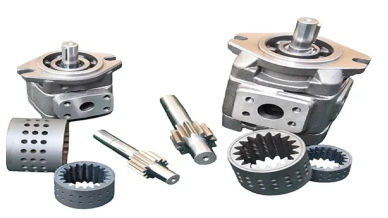
Internal gear pumps are highly versatile and play a crucial role across numerous food and beverage processes. Their ability to handle viscous, shear-sensitive, and temperature-variable fluids makes them an indispensable tool in modern processing lines.
Viscous syrups, jams, and sauces demand precise, pulse-free pumping to maintain texture and flavor. Internal gear pumps provide smooth, consistent flow without splashing or aeration, preserving product integrity. This is particularly important in high-volume production lines where uniformity ensures consistent taste, viscosity, and appearance across batches.
Dairy products such as milk, cream, and yogurt are highly shear-sensitive. Internal gear pumps gently transport these fluids, preventing frothing, curdling, or structural damage. Their smooth operation ensures that dairy products retain their intended texture, mouthfeel, and quality, which is critical for both consumer satisfaction and regulatory compliance.
Pumping chocolate and other confectionery materials presents challenges due to high viscosity and temperature sensitivity. Internal gear pumps handle thick, heated chocolate smoothly, ensuring consistent delivery to molding, enrobing, or coating machines. This reduces product loss, avoids uneven coatings, and maintains the glossy finish expected in premium confectionery products.
Edible oils, shortening, and fats vary in viscosity depending on temperature and composition. Internal gear pumps efficiently move these products with minimal energy consumption and without altering their physical properties. This is especially beneficial in operations like frying oil recycling, blending, or ingredient batching.
Juices, carbonated drinks, and syrups require careful handling to prevent foaming, aeration, or contamination. Internal gear pumps provide consistent, pulse-free flow for accurate filling, reducing waste and ensuring proper carbonation levels and taste profiles.
Precise volumetric control is essential when adding flavors, extracts, or colorings. Internal gear pumps allow accurate dosing into batches, minimizing variation and ensuring product consistency. Their reliability and gentle pumping make them ideal for delicate or highly concentrated ingredients.
To maintain optimal performance in food and beverage processing, regular maintenance is essential:
Lubrication: Ensure proper lubrication for moving parts to minimize wear.
Inspection: Check for leaks, worn seals, or gear damage periodically.
Clean-in-Place (CIP) Compatibility: Use pumps designed for CIP to maintain hygiene and prevent contamination.
Monitoring: Regularly monitor operating temperature, pressure, and flow rates to detect early signs of issues.
Following these practices ensures longevity, consistent performance, and compliance with food safety standards.
Internal gear pumps are indispensable in modern food and beverage processing. Their gentle handling, consistent flow, ability to manage viscous fluids, and hygienic design make them an ideal solution for a wide range of applications. From dairy and chocolate to syrups and beverages, these pumps enhance product quality, efficiency, and operational reliability.
For businesses seeking high-performance internal gear pumps tailored to food and beverage applications, Zhejiang Keister Hydraulic Co., Ltd. offers advanced solutions designed for durability, efficiency, and hygienic compliance. To learn more about their product range and explore how their pumps can optimize your processing lines, consider contacting Zhejiang Keister Hydraulic Co., Ltd. for professional guidance and support.


