

Views: 0 Author: Site Editor Publish Time: 2025-08-14 Origin: Site


In industrial engineering and fluid power applications, the choice of a reliable pump can significantly impact efficiency, performance, and system longevity. Among the many pump designs available today, the external gear pump has stood the test of time due to its simplicity, durability, and precise performance. Whether in lubrication circuits or hydraulic power systems, extenal gear pumps continue to be an indispensable solution across manufacturing, automotive, and energy industries.
An extenal gear pump is a type of positive displacement pump that uses two intermeshing gears rotating against each other to move fluids. As the gears rotate, fluid is trapped in the voids between the gear teeth and the casing, then transported around the casing and discharged at high pressure.
Key characteristics include:
Compact design: Straightforward construction with two gears (a drive gear and an idler gear) inside a tight housing.
Positive displacement action: Each gear rotation moves a fixed volume of fluid, ensuring consistent delivery regardless of discharge pressure.
Versatility: Capable of handling a wide range of fluids, from thin lubricating oils to viscous hydraulic fluids.
This simple yet highly effective mechanism is the foundation of why extenal gear pumps have become a mainstay in lubrication and hydraulic systems worldwide.
Extenal gear pumps provide several operational benefits that make them attractive for industrial use:
Reliability – Minimal moving parts reduce wear and extend service life.
High pressure capability – They can operate under pressures exceeding 200 bar (2900 psi), making them ideal for hydraulic circuits.
Compact and lightweight – Their small footprint allows for easy integration into tight machine designs.
Wide fluid compatibility – They handle a range of viscosities and temperatures, including lubricants, hydraulic oils, fuels, and even some chemicals.
Consistent flow – Being positive displacement pumps, they deliver precise, repeatable fluid volumes that are crucial in lubrication and metering applications.
These attributes make extenal gear pumps not just useful, but essential in industries where reliability and precision are critical.
Lubrication systems are the lifeline of modern machinery, directly influencing performance, efficiency, and service life. Without proper lubrication, moving components are vulnerable to overheating, premature wear, and even catastrophic breakdowns. Extenal gear pumps are fundamental to these systems, providing reliable and consistent fluid delivery that keeps machines running smoothly.
One of the most important tasks in any lubrication system is maintaining a steady oil flow. Extenal gear pumps deliver a continuous stream of lubricant to bearings, gears, and other moving parts. This protective film reduces friction, prevents direct metal-to-metal contact, and helps dissipate the heat generated during operation.
Delivering the right amount of lubricant is essential. Too little oil accelerates wear, while excess oil can cause energy losses, leakage, or contamination. Extenal gear pumps are valued for their ability to meter lubricants with precision, ensuring each component receives the exact amount required for optimal operation.
Lubricants vary widely in viscosity depending on formulation and temperature. External gear pumps can handle a broad spectrum of oils, from thin low-viscosity fluids to thicker, high-viscosity lubricants, without compromising efficiency. This adaptability makes them suitable for diverse applications, including automotive engines, turbines, and heavy machinery.
Another advantage is their compact footprint. Extenal gear pumps are often integrated directly into engines, turbines, or gearboxes, offering convenience and reliability in centralized lubrication systems. Their small size ensures ease of installation without sacrificing performance.
In essence, extenal gear pumps provide the backbone of lubrication systems, ensuring machines operate smoothly, efficiently, and with minimal downtime.
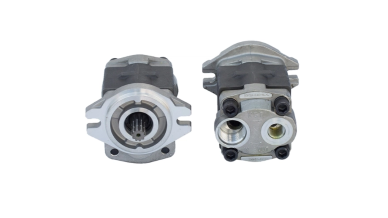
Hydraulic systems depend on pumps to convert mechanical power into fluid power. The extenal gear pump is among the most widely used pumps in hydraulics because of its robust design and dependable output.
In excavators, forklifts, agricultural equipment, and presses, gear pumps deliver pressurized hydraulic fluid that drives cylinders, motors, and actuators. Their ability to maintain consistent flow at high pressures is key to reliable performance.
Compared with piston pumps or vane pumps, extenal gear pumps are more cost-effective while still offering sufficient pressure and flow for many applications. Their rugged design means fewer breakdowns and lower maintenance costs.
Extenal gear pumps provide smooth, low-pulsation fluid delivery, minimizing vibrations and ensuring precise control in hydraulic systems. This is particularly important in sensitive operations such as material handling or machine tools.
They handle various hydraulic fluids, including mineral oils and synthetic formulations, ensuring broad applicability across industries.
From heavy construction machinery to industrial automation systems, extenal gear pumps are the backbone of reliable hydraulic power transmission.
The versatility of extenal gear pumps has enabled them to be used across multiple industries. Some of the most common applications include:
Automotive: Lubricating internal combustion engines, transmissions, and power steering systems.
Manufacturing: Operating machine tools, injection molding equipment, and presses with hydraulic circuits.
Agriculture: Powering hydraulic lifts, sprayers, and tractors.
Energy: Circulating lubricants in turbines, compressors, and generators.
Marine: Providing hydraulic actuation for steering systems and lubrication for engines.
The universality of extenal gear pumps speaks volumes about their adaptability and proven reliability in critical operations.
Even though extenal gear pumps are durable, proper maintenance ensures they operate at peak efficiency.
Regular Inspection – Check for gear wear, bearing alignment, and housing integrity.
Clean Fluids – Contaminants can cause abrasion and reduce efficiency. Regularly filter lubricants and hydraulic oils.
Seal and Bearing Care – Worn seals or bearings can cause leaks and reduced performance. Replace them promptly when needed.
Operating Conditions – Avoid running pumps at excessive pressures, temperatures, or speeds beyond manufacturer recommendations.
Timely Replacement – As with all mechanical components, gear pumps eventually wear out. Replacing them on schedule prevents costly downtime.
Proper care ensures extenal gear pumps continue to provide dependable service for years.
While modern pump technologies such as piston and screw pumps are gaining ground in specific applications, extenal gear pumps continue to dominate lubrication and mid-pressure hydraulic systems due to their simplicity and cost-effectiveness.
Additionally, advancements in materials, tighter tolerances, and improved sealing technology are enhancing their efficiency and durability. Their proven reliability, combined with innovations, ensures that extenal gear pumps will remain essential in industries where uptime, cost control, and precision matter most.
The extenal gear pump may be one of the oldest pump designs in industrial history, but its reliability, compactness, and versatility ensure its ongoing relevance in today’s high-performance environments. From ensuring smooth lubrication in engines and gearboxes to powering hydraulic actuators in construction and manufacturing, external gear pumps are vital to system efficiency and longevity.
For companies seeking dependable fluid transfer solutions, extenal gear pumps represent a balance of performance, affordability, and durability that is hard to match.
If you are interested in learning more about extenal gear pumps and their role in lubrication or hydraulic systems, you can visit Zhejiang Keister Hydraulic Co., Ltd. to explore solutions tailored to industrial applications. The company offers expertise and products that can help enhance the efficiency and reliability of your systems.


