

Views: 421 Author: Site Editor Publish Time: 2026-02-20 Origin: Site


Vane pumps are the workhorses of many industrial hydraulic systems. They offer a fantastic balance of efficiency and low noise, but like any mechanical component, they aren't immune to issues. If you manage a factory or maintain heavy machinery, knowing why a vane pump might fail—and how to fix it—can save you thousands in downtime.
This guide dives deep into the most frequent headaches associated with rotary vane pumps, offering expert insights into diagnosis and prevention.
Noise is usually the first warning sign that something is wrong inside your vane pump. While these units are generally known as low noise vane pumps, a sudden increase in decibels suggests internal distress. The most common culprit is cavitation.
Cavitation happens when the pressure at the pump inlet drops too low. This causes bubbles to form in the hydraulic fluid. When these bubbles move to the high-pressure side, they implode violently. These tiny explosions pit the internal surfaces of the vane pump, leading to rapid wear.
A High-Pitched Screech: Often indicates air is entering the system (aeration).
A "Rattling Marbles" Sound: The classic signature of cavitation.
Vibration: Excessive shaking in the pump housing or connected lines.
To solve this, check your suction line. Is the filter clogged? Is the inlet pipe too small? Even a slightly restricted suction path can starve a high pressure vane pump, causing it to eat itself from the inside out.
When your hydraulic vane pump fails to maintain steady pressure, your entire operation suffers. Actuators move slowly, or worse, they stutter. This problem usually stems from internal leakage or "slippage."
As a vane pump ages, the clearances between the vanes, the rotor, and the cam ring increase. When these gaps get too wide, pressurized oil slips back to the suction side instead of heading out to the system.
| Cause | Description | Impact |
| Worn Vane Tips | The edges of the vanes lose their sharp seal against the cam ring. | Reduced volumetric efficiency. |
| Scored Side Plates | Scratches on the wear plates allow oil to bypass the pumping chambers. | Significant drop in industrial vane pump output. |
| Sticky Vanes | Contaminants prevent vanes from sliding out freely. | Erratic flow and pressure spikes. |
If you notice a drop in flow as the oil heats up, it is a definitive sign of internal wear. Thinner, hot oil slips through worn gaps much easier than cool, thick oil.
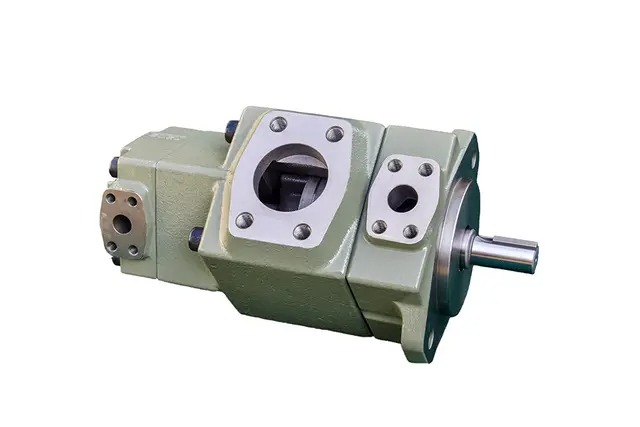
Heat is the silent killer of any vane pump setup. While all hydraulic systems generate some heat, a pump that is too hot to touch indicates a serious efficiency problem.
Excessive heat usually points back to internal friction or bypass leakage. When oil "slips" inside a double vane pump, the energy that should have moved a cylinder is converted into pure heat.
High Pressure Settings: Running a vane pump at its maximum relief valve setting for extended periods creates massive heat.
Incompatible Fluid: Using oil with the wrong viscosity prevents proper lubrication.
Internal Component Rubbing: If the rotor is misaligned, it generates friction against the side plates.
We recommend monitoring reservoir temperatures closely. If the oil exceeds 60°C (140°F), the seals inside your industrial vane pump will begin to harden and crack, leading to the next big problem: leaks.
To truly understand vane pump problems, we must look at the specific parts that fail. The longevity of a rotary vane pump depends on the interface between the vanes and the cam ring.
The cam ring is the circular (or elliptical) track the vanes follow. Over time, particularly in high pressure vane pump applications, the ring can develop "washout" patterns. This is uneven wear that looks like ripples on the surface. Once the ring is no longer smooth, the vanes will bounce, causing even more damage and loud chatter.
The vanes themselves are under constant stress. They must slide out via centrifugal force or hydraulic pressure and stay pressed against the ring.
Vane Snapping: If the system experiences sudden pressure shocks, the vanes can snap.
Rotor Spline Failure: Often caused by misalignment with the electric motor, the splines that connect the shaft to the rotor can strip away, leaving the pump unable to turn.
Vane pumps are more sensitive to dirt than gear pumps. Because the vanes rely on a very thin film of oil to "float" against the cam ring, even tiny particles can cause disaster.
Abrasive Particles: Sand, metal shavings, or dust act like sandpaper inside the vane pump.
Chemical Contamination: Water or air mixing with the oil reduces its lubricating ability.
Varnish: Overheated oil breaks down into a sticky sludge. This sludge "glues" the vanes into their slots. If the vanes can't slide out, the hydraulic vane pump won't prime or produce pressure.
Pro-Tip: Always use a high-quality 10-micron filter on the return line and ensure your vane pump fluid meets the manufacturer’s cleanliness standards.
Sometimes, the vane pump isn't the problem; the way it was installed is. Even the best rotary vane pump will fail if it isn't set up correctly.
Shaft Misalignment: If the pump shaft and the motor shaft aren't perfectly aligned, it creates "side loading." This destroys the bearings and the shaft seal of the vane pump within hours.
Wrong Rotation: Most pumps are directional. Running a hydraulic vane pump in reverse can flip the vanes or prevent the internal lubrication channels from working, leading to instant seizure.
Pipe Stress: If the heavy hydraulic pipes aren't supported, they pull on the pump housing, distorting the internal clearances.
Always use a flexible coupling between the motor and the vane pump to absorb minor vibrations and protect the internal components.
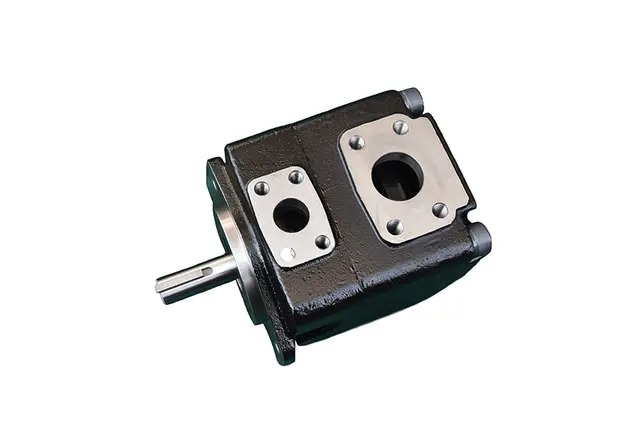
A common "first-start" problem is a vane pump that refuses to prime. You turn the motor on, but no oil moves.
Check for Air Leaks: Even a tiny hole in the suction hose will let the pump suck air instead of oil.
Check the Speed: Vane pumps often need a certain RPM to sling the vanes out via centrifugal force. If your motor is too slow, it won't prime.
Bleed the Air: Air trapped in the discharge line can create backpressure that prevents the pump from drawing oil up. Loosen the outlet fitting slightly to let the air escape.
Oil Viscosity: If the oil is too thick (especially in winter), it won't flow into the rotary vane pump fast enough.
When you are dealing with persistent vane pump failures, you need a partner who understands the hardware from the ground up. At our facility, we don't just sell parts; we engineer reliability. As a leading manufacturer specializing in industrial vane pumps, we have spent decades perfecting the metallurgy and precision machining required for high pressure applications.
Our Factory Strength: We operate a state-of-the-art production line where every double vane pump undergoes rigorous load testing before it leaves the floor.
Precision Engineering: We use advanced grinding techniques to ensure our cam rings have a mirror finish, significantly reducing the "noise" and "wear" problems discussed in this article.
Global Supply Chain: We understand the B2B landscape. Whether you need a single replacement or a bulk order for OEM machinery, we provide the technical documentation and support to keep your lines running.
By choosing our low noise vane pump designs, you are investing in a product built to withstand the harshest industrial environments. We focus on the details—like specialized heat treatment for vanes—that prevent the common problems lesser pumps face.
Understanding the common problems with a vane pump is the first step toward a more reliable hydraulic system. From managing cavitation and heat to ensuring surgical-level fluid cleanliness, your maintenance routine dictates the lifespan of your equipment. Whether you are running a double vane pump for heavy pressing or a low noise vane pump for a precision lab, the principles remain the same: monitor the sound, manage the heat, and keep the oil clean.
By addressing these issues early, you can ensure your industrial vane pump remains an asset rather than a liability.
Q1: How long should a typical vane pump last?
In a clean environment with proper maintenance, a high-quality vane pump can last 10,000 to 20,000 hours. However, poor filtration can cut this down to less than 1,000 hours.
Q2: Can I repair a scored cam ring?
Generally, no. Once the cam ring of a high pressure vane pump is badly scored or shows "washout," it must be replaced. Attempting to regrind it usually changes the internal geometry too much for the vanes to track correctly.
Q3: Why is my vane pump leaking from the shaft?
This is usually a failure of the shaft seal. It can be caused by excessive case pressure, shaft misalignment, or simply old age where the rubber has hardened.
Q4: Are vane pumps better than gear pumps?
It depends. Vane pumps are generally quieter and more efficient at medium pressures, making them ideal for indoor industrial use. Gear pumps are more rugged and handle dirt better but are much louder.


