

Views: 0 Author: Site Editor Publish Time: 2025-10-22 Origin: Site


Vane pumps are a cornerstone of modern hydraulic systems, offering reliable performance across a variety of industrial applications. Understanding their operating principles, advantages, and typical uses is essential for engineers, technicians, and anyone working with hydraulic machinery.
Vane pumps belong to the category of positive displacement pumps, meaning they move a specific volume of fluid with each rotation of the pump mechanism. This ensures consistent flow regardless of pressure changes, making them highly suitable for precision hydraulic applications. Vane pumps are widely used in sectors ranging from manufacturing and automotive systems to chemical processing and aviation.
Vane pumps operate using a set of sliding vanes mounted on a rotor that rotates inside a cam ring. As the rotor spins, centrifugal force and spring pressure push the vanes outward, maintaining contact with the cam surface. This creates sealed pockets that draw in fluid at the inlet and push it toward the outlet under pressure.
Vane pumps are widely appreciated in hydraulic systems for their efficiency, precision, and versatility. Understanding their operational principles and design variants is key to selecting the right pump for your application.
The core functionality of a vane pump revolves around its ability to move fluid through positive displacement. The main components include:
Rotor: This is the central spinning element that drives the vanes. The rotor’s rotation is typically powered by an electric motor, engine, or hydraulic motor, depending on the system.
Vanes: Sliding elements mounted within the rotor slots. As the rotor turns, centrifugal force and/or spring pressure pushes the vanes outward to maintain contact with the cam ring. These vanes create sealed pockets that capture and transfer fluid through the pump.
Cam Ring: The cam ring defines the shape of the pumping chamber and guides the radial motion of the vanes. Its slightly oval or eccentric shape ensures that the chambers expand and contract appropriately to draw in and expel fluid.
Inlet and Outlet Ports: Strategically placed to allow fluid entry at the expanding side of the chamber and fluid exit at the contracting side.
Vane pumps are especially valued for their ability to maintain a consistent flow across varying speeds and pressures, making them reliable in both stationary and mobile applications.
Vane pumps come in several configurations, each tailored to specific operational requirements:
Fixed Displacement Vane Pumps: These pumps provide a constant flow rate at a given rotational speed. They are ideal for systems where steady, predictable fluid delivery is critical, such as in automated machinery or industrial presses.
Variable Displacement Vane Pumps: These pumps can adjust the flow rate according to system demands. By changing the angle of the cam ring or employing control mechanisms, the pump regulates output, improving energy efficiency and reducing unnecessary motor load. They are widely used in mobile hydraulics, where load conditions frequently vary.
Balanced Vane Pumps: Designed to counteract radial forces exerted on the rotor, these pumps reduce wear on bearings and vanes, enhancing longevity. They are particularly advantageous in high-speed applications or systems with frequent pressure fluctuations.
Each variant allows engineers to select the pump that best meets the requirements of pressure, flow, and operational flexibility.
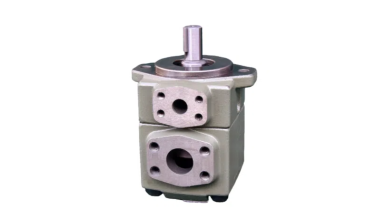
Vane pumps offer a combination of performance, efficiency, and durability that makes them indispensable in modern hydraulic systems:
Unlike some other positive displacement pumps, vane pumps deliver a relatively smooth, continuous flow. This characteristic is vital for precision applications, such as injection molding, robotics, and CNC machinery, where fluctuations in fluid delivery could impair performance or damage equipment.
Vane pumps perform efficiently at medium pressure ranges, typically up to 250 bar. This makes them suitable for a wide array of industrial applications, from automated assembly lines to construction and mobile equipment hydraulics.
Due to their design, vane pumps operate with low noise levels, an important consideration for indoor machinery, commercial vehicles, or aircraft systems. Reduced operational noise contributes to better working conditions and compliance with industrial noise regulations.
Vane pumps are generally compact and lightweight, which allows them to fit into tight spaces without compromising performance. Their adaptable mounting options and multiple variants make integration into diverse hydraulic systems straightforward. This compactness is especially valuable in mobile applications such as forklifts, agricultural machinery, and construction equipment.
With proper maintenance, vane pumps can achieve long service life. Key factors include maintaining clean hydraulic fluid, periodic inspection of vanes and cam rings, and timely replacement of worn components. Many models feature replaceable vanes and cam rings, reducing long-term operational costs and allowing for efficient servicing without full pump replacement.
Additionally, vane pumps are robust against varying temperatures, moderate contamination, and continuous operation, making them ideal for demanding industrial and mobile environments.
Vane pumps can handle a range of hydraulic fluids, including oils, lubricants, and some water-glycol mixtures. This versatility, combined with variable and balanced configurations, allows them to serve applications ranging from industrial machinery and mobile equipment to aerospace and marine systems.
Vane pumps are highly versatile and are used in a variety of industries:
Hydraulic presses, injection molding machines, and conveyor systems often rely on vane pumps for consistent fluid delivery. Their smooth flow reduces vibration and improves the precision of machinery operations.
Power steering systems, transmission units, and hydraulic lifts frequently use vane pumps. Their compact size and reliable performance make them ideal for integration into vehicles and construction machinery.
In aviation, vane pumps provide hydraulic power for landing gear, flight control surfaces, and braking systems. Their quiet operation and reliability under varying pressures are particularly advantageous in this sector.
Vane pumps can handle light to medium viscosity fluids, including lubricants, oils, and some chemicals. Their smooth, pulsation-free flow ensures accurate dosing and safe fluid transfer in sensitive processing applications.
Hydraulic steering, winches, and deck machinery aboard ships often employ vane pumps. Their ability to withstand variable loads and provide reliable service in compact spaces makes them a preferred choice.
Proper maintenance ensures vane pumps operate efficiently and have a long service life:
Regular Oil Checks: Maintain hydraulic fluid cleanliness to prevent vane wear.
Filter Replacement: Keep filters clean to avoid contamination.
Inspection of Vanes and Cam Rings: Replace worn components to maintain performance.
Proper Mounting and Alignment: Incorrect installation can cause vibration and premature wear.
Temperature Monitoring: Avoid prolonged operation at high temperatures to protect pump integrity.
Vane pumps combine reliability, efficiency, and versatility, making them indispensable in modern hydraulic systems. From industrial machinery to automotive, aerospace, and chemical processing, their ability to deliver smooth, consistent flow under varying pressures ensures optimal system performance. For businesses looking to optimize their hydraulic operations, selecting the right vane pump can improve efficiency, reduce maintenance, and enhance overall productivity.
For more information on high-quality vane pumps and professional solutions, visit Zhejiang Keister Hydraulic Co., Ltd.. Their expertise in hydraulic equipment makes them a reliable partner for a wide range of industrial applications.


