

Views: 0 Author: Site Editor Publish Time: 2025-12-30 Origin: Site


Have you ever wondered how machines lift heavy loads with ease? The answer lies in hydraulic pumps. These essential devices convert mechanical energy into fluid power, making them crucial in industries like construction and manufacturing.
In this article, you’ll learn about hydraulic pumps, their functions, and their significance in various applications. We’ll also highlight top manufacturers, including Zhejiang Keister Hydraulic Co., Ltd., known for their quality products.
Hydraulic pumps are remarkable devices that transform mechanical energy into fluid power. This conversion is essential for operating various machinery and equipment. The process begins when a prime mover, such as an electric motor or an engine, generates mechanical energy. This energy drives the pump's internal components, creating a flow of hydraulic fluid.
Energy Conversion Process:
1. Mechanical Energy Input: The prime mover initiates the process.
2. Fluid Movement: The pump displaces hydraulic fluid, increasing its pressure.
3. Fluid Power Output: This pressurized fluid is directed to perform work in hydraulic systems, such as lifting or moving heavy objects.
The efficiency of this conversion is crucial. It determines how effectively the hydraulic system operates.
The prime mover plays a vital role in hydraulic pump operation. It provides the necessary mechanical energy to drive the pump. Depending on the application, different types of prime movers can be used. Here are some common examples:
Type of Prime Mover | Description |
Electric Motor | Common in industrial applications. |
Internal Combustion Engine | Used in mobile equipment like excavators. |
Hydraulic Motors | Often used in specialized applications. |
Each type has its advantages and is chosen based on factors like power requirements and operational environment.
Hydraulic fluids are crucial for the operation of hydraulic pumps. They not only transmit power but also lubricate and cool the system. Common types of hydraulic fluids include:
● Mineral Oils: The most widely used fluids due to their good lubrication properties.
● Water-Based Fluids: These are less flammable and environmentally friendly but may have lower lubricating capabilities.
● Biodegradable Fluids: Gaining popularity in industries focused on sustainability.
Choosing the right hydraulic fluid is essential for optimal performance. Each fluid type has specific properties that affect the efficiency and longevity of the hydraulic system.
Using the right hydraulic fluid ensures that the pump operates efficiently and effectively. Here are some key reasons why this choice matters:
● Lubrication: Proper fluids minimize wear on pump components, extending their lifespan.
● Temperature Control: Fluids help maintain operating temperatures, preventing overheating.
● Contamination Resistance: Quality fluids resist contamination, which can lead to pump failure.
In summary, understanding the core principles of hydraulic pumps, including energy conversion, the role of prime movers, and hydraulic fluid selection, is crucial for anyone working with hydraulic systems. These elements work together to ensure that hydraulic pumps operate smoothly and efficiently.
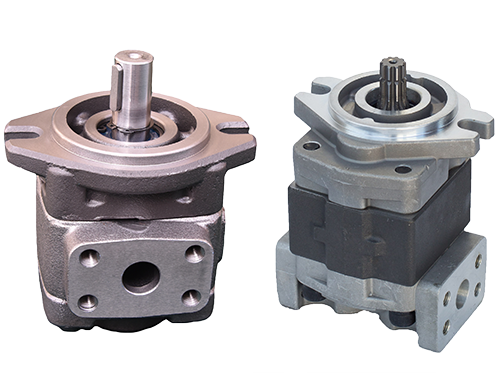
Hydraulic pumps consist of several key components, each playing a crucial role in their operation. Understanding these parts helps us appreciate how they work together to convert mechanical energy into fluid power.
1. Prime Mover The prime mover is the heart of the hydraulic pump. It provides the mechanical energy necessary for the pump to function. There are various types of prime movers, each suited for different applications:
Type of Prime Mover | Description |
Electric Motor | Commonly used in industrial settings for reliability. |
Internal Combustion Engine | Found in mobile machinery like excavators. |
Hydraulic Motors | Often used in specialized applications for efficiency. |
Each type has distinct advantages, depending on the specific needs of the hydraulic system.
2. Inlet and Outlet Ports These ports serve vital functions in the hydraulic pump. The inlet port allows hydraulic fluid to enter the pump, while the outlet port directs the pressurized fluid to the hydraulic system. Properly designed ports ensure efficient fluid flow and minimize pressure loss.
a. Inlet Port: Creates a vacuum that draws fluid from the reservoir.
b. Outlet Port: Releases pressurized fluid into the hydraulic circuit.
3. Housing/Casing The housing or casing protects the internal components from external damage and contamination. It also helps maintain the necessary pressure within the pump. A well-designed casing is essential for durability and performance. High-quality materials are typically used to withstand the stresses of operation.
4. Seals and Bearings Seals and bearings play a critical role in the smooth operation of hydraulic pumps. Seals prevent fluid leaks, which can lead to inefficiencies and potential system failure. Bearings support moving parts, reducing friction and wear over time.
a. Seals: Essential for maintaining pressure and preventing contamination.
b. Bearings: Allow smooth rotation of internal components, enhancing overall efficiency.
The design of these components significantly impacts the performance of hydraulic pumps. For instance, precision engineering in the manufacturing of seals and bearings can lead to better efficiency and longer service life. Companies like Zhejiang Keister Hydraulic Co., Ltd. utilize high-precision machines to enhance the quality of their hydraulic pumps.
Key Design Factors:
● Material Selection: Using high-strength materials helps improve durability.
● Tolerances and Fit: Tight tolerances reduce leakage and enhance efficiency.
● Component Layout: Optimized layouts can improve fluid dynamics, leading to better performance.
In summary, understanding the key components of hydraulic pumps, including the prime mover, ports, housing, seals, and bearings, is essential for grasping how these systems operate effectively. Each part works in harmony to ensure the hydraulic pump delivers reliable and efficient performance across various applications.
Hydraulic pumps come in various types, each designed for specific applications and performance requirements. Understanding these types helps in selecting the right pump for your needs. The most common types include gear pumps, vane pumps, and piston pumps. Let’s explore each type in detail.
Gear pumps are among the simplest and most widely used hydraulic pumps. They operate by using the meshing of gears to pump fluid. The basic mechanism involves two gears rotating in opposite directions, creating a vacuum that draws fluid into the pump.
How Gear Pumps Work:
As the gears turn, they trap fluid in the spaces between the teeth. This trapped fluid is then pushed through the outlet as the gears continue to rotate. Gear pumps can be categorized into two main types:
Type | Description |
Internal Gear Pump | Features an inner gear that rotates within an outer gear, creating a smooth flow. |
External Gear Pump | Consists of two gears that mesh together, providing a simple and effective design. |
Advantages and Applications:
Gear pumps are known for their reliability and efficiency. They are commonly used in various applications, including hydraulic systems in machinery like forklifts and excavators, and in industrial processes for oil and chemical transfer. Keister's internal and external gear pumps are designed for durability and efficiency, making them popular in many industries.
Vane pumps operate using a different mechanism. They consist of a rotor with several vanes that slide in and out of slots as the rotor turns. This design allows for a smooth and continuous flow of hydraulic fluid.
Working Mechanism:
As the rotor spins, centrifugal force pushes the vanes outward against the casing, creating chambers that expand and contract. This action draws fluid into the pump and then pushes it out through the outlet port.
Benefits and Typical Uses:
Vane pumps offer several advantages, such as quiet operation and variable displacement capabilities. Keister's T7SQP series is an excellent example of a vane pump designed for energy-saving systems, making it ideal for applications where efficiency is key.
Piston pumps are designed for high-pressure applications and are known for their ability to generate significant pressure. They use pistons that move back and forth within cylinders to create fluid flow.
Operation:
In a piston pump, the pistons are driven by a crankshaft or a cam mechanism. As the pistons move, they create a vacuum that draws fluid into the cylinder during the intake stroke. During the discharge stroke, the fluid is forced out under high pressure.
Ideal Applications:
Piston pumps are often used in applications requiring high pressure, such as construction equipment in hydraulic systems for excavators and bulldozers, industrial machinery for metal forming and injection molding, and hydraulic testing equipment for assessing system integrity.
Understanding the different types of hydraulic pumps—gear pumps, vane pumps, and piston pumps—enables users to select the most suitable pump for their specific applications. Each type has unique mechanisms and advantages, contributing to the overall efficiency of hydraulic systems.
Hydraulic pumps are essential components in hydraulic systems, converting mechanical energy into fluid power. Understanding their working mechanism is key to grasping how they operate effectively in various applications. This section delves into the principles behind hydraulic pumps, focusing on the suction and discharge phases, pressure development, and energy efficiency features in Keister hydraulic pumps.
The working principle of hydraulic pumps revolves around the movement of hydraulic fluid through a closed system. The process can be broken down into two main phases: suction and discharge.
Suction Phase: During this phase, the pump creates a vacuum that draws hydraulic fluid from the reservoir into the pump. As the pump's internal components move, they expand the space within the pump, causing the pressure to drop. This drop allows atmospheric pressure to push fluid into the pump through the inlet port.
Discharge Phase: Once the pump is filled with fluid, the internal components compress the fluid, increasing its pressure. The pressurized fluid is then forced out through the outlet port, delivering hydraulic power to the connected systems. This continuous cycle of suction and discharge enables hydraulic pumps to perform work efficiently.
Pressure in a hydraulic system develops as a result of the interaction between resistance and load. When the hydraulic fluid is pressurized, it encounters resistance from various components, such as hoses, valves, and actuators.
Key Factors in Pressure Development:
● Load Interaction: When the hydraulic fluid encounters a load, such as lifting a heavy object, it creates resistance. This resistance increases the pressure within the system.
● Fluid Dynamics: The movement of fluid through the system also affects pressure. Faster fluid flow can lead to higher pressure, while restricted flow can cause pressure drops.
This interplay of pressure and resistance is crucial for the proper functioning of hydraulic systems, ensuring that the desired force is achieved.
Keister hydraulic pumps are designed with energy efficiency in mind. Their vane and gear pumps incorporate several features aimed at reducing energy consumption while maintaining high performance.
Energy-Saving Features:
Feature | Description |
Variable Displacement | Allows the pump to adjust its output based on system demands, reducing unnecessary energy use. |
High-Efficiency Motors | Utilizes advanced motor technology to minimize energy loss during operation. |
Optimized Design | The pump's internal components are designed to reduce friction and improve fluid flow, enhancing overall efficiency. |
These innovations not only contribute to lower operational costs but also support sustainability efforts by minimizing energy waste.
By understanding the working mechanism of hydraulic pumps, including the phases of operation and the principles of pressure development, users can appreciate how these devices function effectively in various applications. Keister's commitment to energy efficiency further exemplifies the advancements in hydraulic technology.
Hydraulic pumps play a crucial role in converting mechanical energy into hydraulic energy, enabling various applications from heavy machinery to automotive systems. To fully understand how these pumps work, we need to examine the two main phases of operation: suction and discharge. Additionally, innovations in hydraulic pump design have significantly enhanced their efficiency and performance.
During the suction phase, hydraulic pumps create a vacuum that draws fluid into the pump. This process begins when the pump's internal components, such as gears or pistons, start moving, which expands the space within the pump.
● Creating a Vacuum: As the internal components rotate or slide, they create a low-pressure area, causing atmospheric pressure to push fluid from the reservoir into the pump. This is essential for ensuring a continuous flow of hydraulic fluid.
● Fluid Ingress: The fluid enters through the inlet port, filling the pump chamber. The design of the inlet port is crucial, as it must allow for smooth fluid entry without causing turbulence.
This phase is vital for preparing the pump to generate pressure during the discharge phase.
Once the pump has filled its chamber with fluid, it transitions into the discharge phase. This phase involves trapping the hydraulic fluid and forcing it out into the hydraulic system.
● Trapping Fluid: As the internal components continue to move, they compress the trapped fluid, raising its pressure. This is where the pump's design plays a significant role; efficient designs minimize the volume of fluid lost during this process.
● Forcing Fluid Out: The pressurized fluid is then expelled through the outlet port into the hydraulic circuit, where it can perform work, such as lifting a load or powering machinery. The pressure generated in this phase is crucial for the effective operation of hydraulic systems.
This two-phase operation—suction and discharge—ensures that hydraulic pumps function effectively, providing the necessary power for various applications.
Recent advancements in hydraulic pump technology have focused on improving efficiency, reliability, and performance. Collaborations with institutions like Zhejiang University have led to significant innovations in pump design.
Overview of Advancements:
Innovation | Description |
Smart Control Systems | Incorporating sensors and controls for real-time monitoring and adjustment, enhancing efficiency. |
Advanced Materials | Using lightweight, durable materials to reduce wear and extend pump life. |
Improved Fluid Dynamics | Enhanced designs that optimize fluid flow, reducing energy consumption. |
These innovations not only improve the operational efficiency of hydraulic pumps but also contribute to sustainability by reducing energy waste and increasing the lifespan of the equipment. The collaboration between industry and academia is paving the way for the next generation of hydraulic technology.
By understanding these operational phases and the latest advancements, we can appreciate the complexity and efficiency of hydraulic pumps in modern applications.

The performance of hydraulic pumps is influenced by several key factors that can significantly impact their efficiency and longevity. Understanding these factors helps in optimizing pump performance and ensuring reliable operation in various applications. This section will explore the factors that influence hydraulic pump performance, including displacement types, fluid quality, and the effects of contamination.
Several factors play a crucial role in determining how well a hydraulic pump performs. These include:
1. Displacement Type: The choice between fixed and variable displacement pumps can affect the system's overall efficiency.
2. Fluid Quality: The type of hydraulic fluid used is essential for optimal pump operation.
3. Contamination Levels: The presence of contaminants can severely impact pump efficiency and lifespan.
Each of these factors interacts with the others, creating a complex web of influences on pump performance.
Understanding the differences between fixed and variable displacement pumps is critical for selecting the right type for specific applications.
● Fixed Displacement Pumps: These pumps deliver a constant volume of fluid with each cycle, regardless of the pressure in the system. They are straightforward and reliable but can lead to energy waste if not matched to the system's requirements.
● Variable Displacement Pumps: These pumps can adjust the volume of fluid they deliver based on system demands. This flexibility allows for greater efficiency, especially in applications where load conditions frequently change.
Type | Description | Advantages |
Fixed Displacement | Delivers a constant flow rate. | Simple design, reliable operation. |
Variable Displacement | Adjusts flow rate based on demand. | Higher efficiency, energy savings. |
The quality of hydraulic fluid is vital for the performance and longevity of hydraulic pumps. Using the correct fluid type ensures optimal lubrication and cooling, which reduces wear and tear on pump components.
● Viscosity: The fluid must have the right viscosity to ensure smooth operation. If the fluid is too thick, it can lead to increased resistance and energy loss. Conversely, if it is too thin, it may not provide adequate lubrication.
● Additives: Many hydraulic fluids contain additives that enhance performance, such as anti-wear agents and corrosion inhibitors. Selecting a fluid with the right additives can significantly improve pump efficiency and lifespan.
Contamination is one of the leading causes of hydraulic pump failure. Particles, water, and other contaminants can enter the hydraulic system through various means, including leaks and improper handling.
● Effects on Efficiency: Contaminants can cause increased friction, leading to energy loss and reduced efficiency. They can also obstruct fluid pathways, resulting in pressure drops and erratic operation.
● Impact on Longevity: Over time, contaminants can wear down pump components, leading to premature failure. Regular maintenance and filtration can help mitigate these risks, ensuring that hydraulic pumps operate efficiently for longer periods.
By understanding these performance factors—displacement types, fluid quality, and contamination effects—we can better appreciate how to maintain and optimize hydraulic pump systems for various applications. Proper management of these elements is essential for achieving reliable and efficient hydraulic operations.
Understanding how hydraulic pumps work is essential for effective application. These pumps convert mechanical energy into hydraulic power, enabling various systems to function.
Key points include the suction and discharge phases, performance factors, and innovations in design.
Consider the impact of quality hydraulic pumps, like those from Keister, in enhancing efficiency and reliability in your operations. Choosing the right pump can lead to significant benefits in performance and longevity.
A: The lifespan of a hydraulic pump typically ranges from 5 to 15 years, depending on usage and maintenance.
A: Hydraulic pumps should be serviced regularly, ideally every 3 to 6 months, or as recommended by the manufacturer.
A: Many hydraulic pumps can be repaired, but replacement may be necessary if the damage is severe or components are worn out.
A: Signs include unusual noises, decreased performance, leaks, and excessive heat during operation.


