

Views: 0 Author: Site Editor Publish Time: 2025-09-25 Origin: Site


Industrial processes often rely on the smooth and efficient movement of fluids. While handling light oils, fuels, and water-like liquids is relatively straightforward, high-viscosity fluids present a much more complex challenge. Fluids such as heavy lubricants, polymers, adhesives, and resins can place extraordinary demands on pumping equipment, often leading to inefficiencies, premature wear, or outright system failure if the wrong technology is used.
Among the various pumping solutions available, the extenal gear pump has emerged as one of the most reliable and effective technologies for managing viscous materials. Its precise, positive displacement design allows it to deliver consistent flow, maintain pressure, and handle a broad range of viscosities without sacrificing performance.
Viscous fluids resist flow, requiring more energy and higher pressure to move through pipelines and equipment. This creates several common challenges for pumping systems:
Reduced Efficiency: Many pump designs struggle with slippage and cavitation when dealing with thick fluids.
Excessive Heat Generation: High resistance to flow increases friction, which can generate heat and damage both pumps and fluids.
Wear and Tear: Pumps not designed for viscous materials experience accelerated gear or bearing wear.
Flow Instability: Maintaining a steady, pulsation-free flow is difficult with fluids that resist movement.
To overcome these challenges, industries need pumps that can generate high torque, minimize leakage, and maintain volumetric efficiency even with heavy materials. Extenal gear pumps are uniquely capable of addressing these requirements.
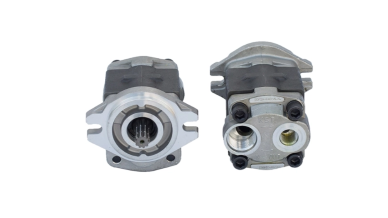
Extenal gear pumps operate using two meshing gears inside a tightly fitted housing. As the gears rotate, fluid is trapped between the gear teeth and the casing, then carried around the perimeter of the housing from the suction side to the discharge side. The meshing of the gears at the center prevents backflow, ensuring precise displacement with every rotation.
This simple yet robust mechanism provides several benefits for viscous fluids:
Positive displacement action guarantees consistent flow regardless of viscosity.
Tight tolerances reduce internal leakage (slip), which can be problematic in centrifugal pumps.
High-pressure capability enables movement of dense, sticky fluids through complex piping systems.
Extenal Gear Pump have long been recognized as one of the most effective solutions for pumping high-viscosity fluids. Their design and operational characteristics address the unique challenges associated with thick, resistant fluids, providing reliable performance where other pump types may struggle.
Unlike centrifugal pumps, which rely on kinetic energy to move fluids, extenal gear pumps operate as positive displacement pumps. This means that a fixed volume of fluid is moved with every rotation of the gears, ensuring a steady and predictable flow regardless of the fluid's viscosity. For materials such as asphalt, molasses, syrups, or heavy lubricating oils, this characteristic is essential, as it prevents flow inconsistencies and minimizes the risk of air pockets or cavitation within the system. The precision offered by positive displacement allows industrial processes to maintain exact dosing and transfer rates, critical in both chemical processing and food manufacturing applications.
High-viscosity fluids require more energy to move, often necessitating pumps that can sustain significant pressure. Extenal gear pumps are capable of generating and maintaining high pressures consistently, enabling them to push dense or sticky fluids through complex pipelines and long transfer lines. This capability ensures that fluid reaches its destination efficiently, without interruptions or backflow, which is especially important in applications like heavy fuel oil transfer or resin handling.
Extenal gear pumps are extremely versatile, capable of handling fluids ranging from less than 1 centipoise, such as gasoline, to several hundred thousand centipoise, like industrial adhesives or polymer resins. This wide operational range allows manufacturers to standardize on a single pump type for multiple applications, simplifying maintenance and reducing inventory requirements for spare parts.
The compact form factor of extenal gear pumps allows easy integration into systems with limited space, while the rugged construction—including hardened gears, precision bearings, and durable casings—ensures a long service life even under continuous operation with high-viscosity fluids.
For viscous materials, maintaining a stable and consistent flow is critical. Extenal gear pumps provide a non-pulsating, predictable flow, preventing pressure fluctuations that could damage sensitive downstream equipment. This ensures process consistency, reduces maintenance issues, and safeguards product quality in demanding industrial applications.
By combining these features, extenal gear pumps provide a reliable, efficient, and versatile solution for high-viscosity fluid handling across a broad range of industries.
Strengths: Effective for low-viscosity fluids and high-flow applications.
Limitations: Struggle with high-viscosity fluids due to slippage, cavitation, and efficiency loss.
Strengths: Handle a broad viscosity range with smooth flow.
Limitations: Generally better suited for medium- to high-viscosity fluids, but can be more complex and costly than external gear pumps.
Strengths: Excellent for continuous, low-pulsation flow of viscous fluids.
Limitations: Larger footprint and higher maintenance demands compared to gear pumps.
Strengths: Compact, durable, versatile, and highly efficient for both low- and high-viscosity applications.
Limitations: May be less suited for abrasive or contaminated fluids without proper filtration.
By balancing efficiency, cost, and simplicity, extenal gear pumps often outperform alternative solutions in scenarios where high-viscosity fluids must be moved reliably and cost-effectively.
Extenal gear pumps are widely used across industries where high-viscosity fluids are common:
Lubrication Systems: Delivering thick oils and lubricants to bearings, gears, and machinery.
Chemical Processing: Handling polymers, resins, adhesives, and coatings with precision.
Food and Beverage: Pumping syrups, chocolate, molasses, and other viscous ingredients.
Energy Sector: Transferring heavy fuel oils and bitumen in power plants and refineries.
Automotive and Marine: Circulating engine oils and gear lubricants under demanding conditions.
In each of these industries, extenal gear pumps provide steady, efficient, and reliable performance, minimizing downtime and ensuring consistent product quality.
To maximize efficiency and extend pump life, operators should follow these practices:
Preheating Fluids: Slightly warming high-viscosity fluids can reduce resistance and improve pumping efficiency.
Proper Filtration: Protects pumps from particulate matter that could accelerate wear.
Correct Sizing: Ensuring the pump is properly sized for flow rate and viscosity avoids undue stress.
Material Selection: Choosing pumps with corrosion-resistant alloys or specialized seals ensures compatibility with specific fluids.
Regular Maintenance: Periodic inspection of gears, bearings, and seals prevents unexpected breakdowns.
Pumping high-viscosity fluids presents unique challenges, but extenal gear pumps rise to the occasion with their positive displacement design, high-pressure capability, and ability to handle a wide viscosity range. Their compact size, durability, and predictable flow make them ideal for industries as diverse as chemicals, food processing, energy, and manufacturing.
For businesses looking for reliable extenal gear pumps tailored to demanding applications, Zhejiang Keister Hydraulic Co., Ltd. provides high-quality solutions engineered for performance and longevity. Their expertise in hydraulic systems ensures customers receive pumps designed to meet the challenges of high-viscosity fluid handling. To learn more about their offerings, visit Zhejiang Keister Hydraulic Co., Ltd. and explore how their technology can support your operations.


